2027 Ram ProMaster City pricing and specifications
The compact work van arrives in 2027 with a starting price of $39,995 to fill a vacant niche in the American commercial vehicle market.
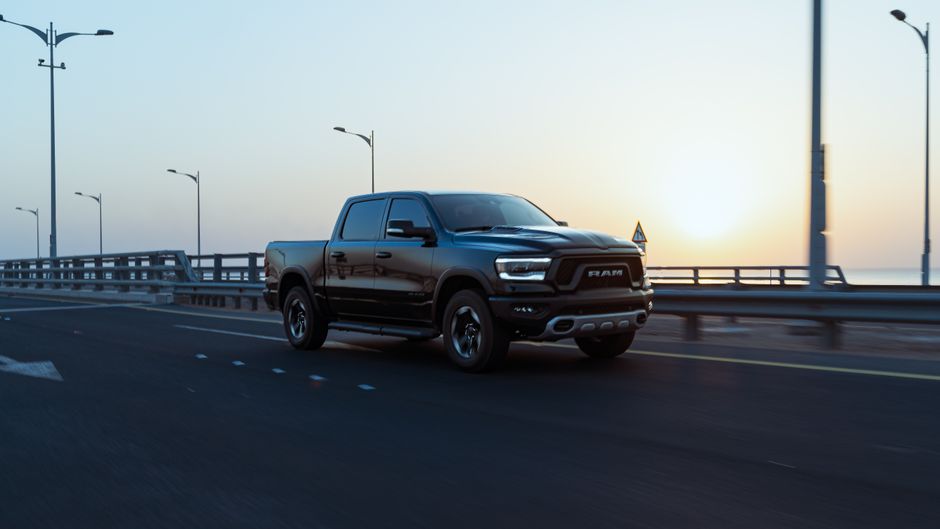
Ram is reintroducing the compact van segment to the United States with the 2027 ProMaster City. The model is designed for business owners who require a smaller footprint than full-size vans while maintaining utility for work tasks. According to Car and Driver, this vehicle occupies a niche that has been largely vacant in the U.S. market for several years.
The 2027 Ram ProMaster City starts at $39,995 for the base Tradesman Cargo trim. This price includes a $2,595 destination fee. By positioning itself under the $40,000 mark, Ram claims the vehicle is the most affordable commercial van currently available in the U.S. (Car and Driver).
Comparative pricing shows significant gaps between this model and its competitors:
- It costs $3,495 less than the Chrysler Pacifica LX.
- It costs $8,970 less than the 2026 ProMaster 1500 Tradesman Cargo Van.
- It undercuts the Ford Transit by $11,000.
- It remains priced below the $51,285 Mercedes Sprinter (CarScoops).
For buyers seeking more features or different configurations, Car and Driver reports that the SLT Cargo trim starts at $41,495. Passenger Wagon versions are also available, with a Tradesman configuration starting at $42,695 and an SLT variant starting at $44,195.
Dimensions and cargo capacity
The 2027 model is based on the Citroen Jumpy platform (also known as the Fiat Scudo), making it larger than its predecessor which was derived from the Fiat Doblò. According to Car and Driver, the new dimensions are:
- Length: 210 inches (an increase of nearly two feet).
- Height: 76.7 inches (a 2.7-inch increase).
- Width: 75.7 inches (a 3.6-inch jump).
While these dimensions make the van larger than previous iterations, it remains significantly smaller than full-size options like the Chevy Express. The cargo area provides 167 cubic feet (4,732 liters) of space with a load floor measuring 111.1 inches (2,822 mm) in length. There is 48.9 inches (1,242 mm) of clearance between the rear wheel wells, allowing for the transport of pallets and 4-by-8-foot drywall sheets.
Powertrain and performance
The ProMaster City utilizes a turbocharged 1.6-liter four-cylinder engine. This powertrain produces 166 horsepower (124 kW / 168 PS) and 221 lb-ft (299 Nm) of torque, delivered to the front wheels via an eight-speed automatic transmission.
The van’s utility is capped at a payload capacity of over 2,000 lbs (907 kg). It also features a towing capacity of 2,000 lbs (907 kg) when equipped with an optional Class 3 hitch. For comparison, Car and Driver notes that these figures are lower than the Ford Transit, which can tow up to 6,900 lbs and carry up to 5,103 lbs.
Trim levels and equipment
The Tradesman trim includes a 10-inch digital instrument cluster, a 10-inch infotainment system with navigation, Apple CarPlay, and Android Auto. Standard features include a 5-inch digital rearview mirror, heated front seats, a tilt-and-telescoping steering column, and automatic up/down windows (Car and Driver). Safety systems come standard as well, including forward collision warning with automatic emergency braking, driver attention alert, automatic headlights/high beams, a rearview camera, rear parking sensors, and a programmable speed limiter.
The SLT trim adds several aesthetic and comfort upgrades:
- Body-colored bumpers and side panels.
- Fog lights.
- 17-inch aluminum wheels.
- Heated steering wheel.
- Wireless smartphone charger.
- Front parking sensors.
The passenger variant can be configured with seating for either five or eight people (CarScoops).
Production timeline
Production for the 2027 Ram ProMaster City is scheduled to begin later this year in Bursa, Turkey. Deliveries are expected to commence in the first quarter of 2027.
Analysis and outlook
The introduction of the ProMaster City represents a strategic move by Stellantis to capture the small business market that requires maneuverability over heavy-duty hauling capacity. While its payload and towing limits are significantly lower than full-size work vans, the primary value proposition is the price point and ease of navigation in urban environments.
Readers should watch for how these units perform under real-world load, particularly given the 1.6-liter engine’s output compared to the heavier payload capacity. The reliance on European-sourced platforms (Citroen Jumpy/Fiat Scudo) suggests a standardized global architecture that may simplify parts availability but also ties American inventory to European production schedules.